



5 Leadership Skills Managers Need for the Future of Work
5 Leadership Skills for the Future
What Future Managers Need in an AI-Dominated Business Environment
As we end the year and look toward the next, what does leadership look like in a digital, AI-driven world?
Identifying the critical leadership competencies for managers that will matter in the future is essential for HR and Learning & Development professionals. This blog will delve into in-demand skills that will be critical to effective managerial leadership, such as communication, emotional intelligence, delegation and strategic thinking. All of these skills are crucial to maintaining a productive and committed global workforce in an ever-evolving world.
The Problem: Why Leadership Skills Count
It can be very difficult for businesses to keep up with tech trends and satisfy the expectations of employees who change roles more frequently than ever. It’s a challenging order: Your managers must meet daily operational demands while setting the stage for the new leaders of tomorrow. Many studies and industry surveys suggest that employees stay longer when organisations invest in development — yet in practice, managers often don’t have the support or skill set to lead well in this environment. This can lead to disinterested employees and high turnover.
Consequences of Disregarding Leadership Qualities
Failing to grow key leadership qualities can damage an organisation’s culture and business. Here are some of the resulting effects:
- Decreasing engagement or retention: Employees will become disengaged if they believe their managers do not support them.
- Leadership fatigue: Reacting to challenge after challenge without good leadership can fatigue many managers and their teams.
- Siloed teams: Ineffective leadership produces silos and reduces collaboration and innovation.
- Decline of innovation: When leaders can’t think strategically or delegate effectively, organisations may become less adaptable when the market starts to change.
In consideration of these possible challenges, the importance of capacity building for present and emerging leaders is key.
Core Skills for the Manager of Tomorrow
Step 1: Becoming a Communication Master
When the pace increases, communication becomes the difference between alignment and chaos. The ability to communicate thoughts, expectations and feedback is a game changer as a manager.
What It Is:
- Listening, giving constructive feedback and creating an environment in which dialogue is encouraged.
How It Makes You a Better Leader:
- Good communicators create trust and reduce conflict among team members.
Tangible Benefits:
- Easier teamwork, improved morale and increased creativity.
Action Step:
- Hold weekly team check-ins where everyone shares updates to foster open communication.
Step 2: Developing Emotional Intelligence
Emotional intelligence (EI) increasingly emerges as a key dimension of effective leadership. Managers who understand their own emotions and sense the emotions of others can forge much stronger relationships, especially in high-pressure and hybrid environments.
What It’s About:
- Self-awareness, empathy and relationship management.
How It Enhances Leadership Skills:
- High-EI managers handle stress better and respond constructively to team members’ emotions.
Tangible Outcomes:
- Stronger team culture, reduced turnover and higher employee satisfaction.
Practical Challenge:
- Introduce a short ‘feelings check-in’ during team meetings.
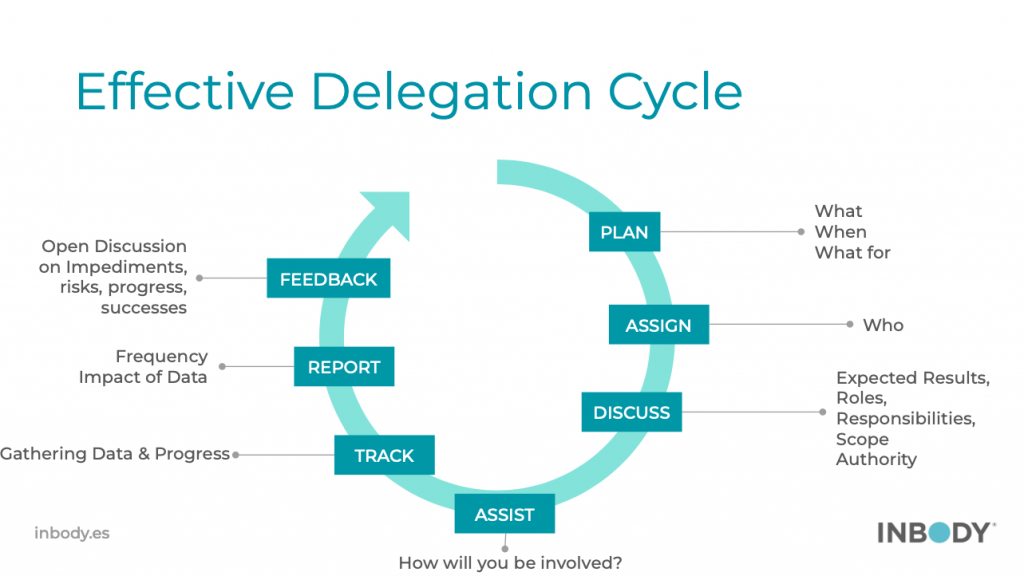
Step 3: Understanding the Cycle of Delegation
Delegation is not just about assigning tasks; it is a leadership skill that helps build future team leaders.
What It Entails:
- Knowing team strengths and weaknesses to distribute tasks effectively.
How It Makes You a Better Leader:
- Delegation empowers teams, increases accountability and supports growth.
Tangible Returns:
- Higher productivity, greater satisfaction and more time for strategic work.
Do:
- Run a delegation workshop using a simple team strengths matrix to clarify ownership.
Step 4: Adopting Strategic Thinking
In a dynamic environment, recognising long-term trends allows managers to anticipate what is coming and respond with intention rather than panic.
What It Is:
- Thinking critically about organisational direction and aligning teams with strategic objectives.
How It Enhances Leadership:
- Strategic thinkers are proactive rather than reactive and prepare teams for future challenges.
Concrete Benefits:
- Encourages innovation, mitigates risk and supports sustainable growth.
Application:
- Facilitate strategic brainstorming sessions. Useful facilitation methods can be found at https://www.liberatingstructures.com/
Step 5: Creating a Leadership Culture
Creating a culture where leadership development is core to success is essential for long-term organisational performance.
What It Is:
- Embedding leadership values into everyday organisational practices.
Why It Enhances Leadership:
- A leadership culture encourages more people to step up and develop leadership capability.
Not Just Soft Skills:
- Builds a resilient, agile workforce prepared for future challenges.
Exercise:
- Create a simple internal mentoring programme where leaders share experience, strengthen culture and identify emerging talent.
Consider the transformation of a mid-level manager in a tech company who improved her team by focusing on emotional intelligence and strategic thinking. After six months, collaboration improved and employee satisfaction increased significantly.
“Her leadership development has transformed the team dynamics.”
Conclusion
Leadership skills for managers are no longer a nice-to-have but a strategic necessity. By strengthening communication, emotional intelligence, delegation and strategic thinking, HR and L&D can build leadership cultures that support performance and innovation — even as AI reshapes the workplace.
Next Steps
Want to take your leadership capacity to the next level?
Explore our Leadership Training and Team Coaching, or dive deeper into our resources on motivation and conflict resolution.
Book a free 30-minute clarity call to explore tailored leadership development for your organisation.

MAIKE STOLTE
Executive Coach. Consultant. Trainer. Facilitator.
Categories
Contact us


Leadership in an AI-Driven World
Leadership in an AI-driven world requires trust, ethics, presence, and human judgment. Learn what leadership must look like now.

Leading Hybrid Teams
Leading hybrid teams requires new leadership behaviours. Learn how trust, clarity, and autonomy help hybrid teams perform and stay engaged.

Leading in Uncertainty
High-performing teams are built through leadership behaviours that create trust, clarity, and psychological safety. Learn what actually drives team performance.
0 Comments