

'/%3E%3Cpath%20fill='%23b2b2b2'%20d='M241%20382q0%2016%2017%2026%2017%2011%2042%2011t42-11q16-11%2017-26V269H241'/%3E%3Cpath%20fill='%239f7e00'%20d='M241%20379q0%2014%208%2023%209%209%2021%209%2014%200%2021-9%209-9%209-23V269h-59'/%3E%3Cpath%20d='M241%20339v-70h59v110q0%2014-9%2023l-6%205v-68h-15v72q-8%200-14-4v-68zm59%2040c0%2022%2015%2032%2029%2032%2021%200%2030-18%2030-32v-40h-59'/%3E%3Cpath%20fill='%239f7e00'%20d='M266%20277v5h2v12h-3v-5h2v-5h-9v5h2v5h-4v9h3v18h-5v10h34v-10h-5v-18h3v-9h-4v-5h2v-5h-9v5h2v5h-3v-12h2v-5zm42%20101q0%2010%206%2017%206%206%2015%207%2010-1%2016-7%206-7%206-17v-29h-43'/%3E%3Ccircle%20fill='%230044ad'%20cx='329.5'%20cy='372'%20r='6'/%3E%3Cellipse%20fill='%230044ad'%20cx='300'%20cy='340'%20rx='16'%20ry='21'/%3E%3C/svg%3E)

How to Be a Good Leader
Are you a Good Leader?
Effective Leaders = Good Leaders.
If you’ve ever asked yourself how to be a good leader at work, you’re not alone. We tend to talk in good and bad, basic binary terms, when it comes to evaluating leadership, but this does not provide the necessary data to properly understand what makes an effective leader, what motivates people and how to retain and even nurture talent.
So what actually makes an effective leader, and what does “how to be a good leader” really mean in practice?
This question is the subject of many HR and L&D professionals’ ongoing attention, and they do so because leadership is so key to organizational success. With challenges like change fatigue and the uncertainty of today’s workplace, better investment in effective leadership behaviours than ever before is further imperative. In this article, we will look at essential and effective leadership pratices that good (or rather effective) leaders personify, drawing on behavioural science, emotional intelligence research and real world examples to see just what these are.
What’s Really Going On?
Team performance gaps usually reflect leadership deficits. Over 68 percent of employees report feeling disengaged at work. This lack in organization depth can often be traced back to ineffective leadership practices, where leaders have not understood the emotional impact they are wielding or failed to create an environment for open communication. Hence it is imperative that leadership is seen as a capacity rather than a role.
Moreover, it becomes a muscle that continuously trains skills such as empathy, active listening and growth mindset. But how can this be relevant now? The pressures of the current digital, AI driven work require leaders who can build trust and resilience in their people and know how to be a good leader in times of ongoing change.

What Happens When Ineffective Leadership Is Not Addressed?
Neglecting to fill these titanic gaps in leadership will often prove prohibitive for any organisation. If left unchecked, one or more of the following could occur:
- Decreased Employee Engagement: Poor leadership skills manifest in diminishing morale and inner motivation. Research from organisations such as Gallup and Yale School of Management has repeatedly highlighted the link between leadership quality and engagement.
- Increased Turnover: A positive leadership ecosystem will keep staff engaged and committed, whereas ineffective leadership creates high turnover rates that are costly and difficult to reverse.
- Lower Productivity: Employees who have no heart for their work tend to disengage, leading to reduced productivity and poorer performance.
- Poor Team Dynamics: Leadership styles that do not fit create disharmony among members of a staff.
- Negative Culture: An intractable leadership mode engenders a toxic culture where people may need many months to rid themselves of its effects.
When HR and L&D don’t effectively address these issues, they are not simply threatening team performance, they are threatening the very fabric of the organisation. So, let us shift our attention to five habits which might make a good, or rather effective leader, for anyone asking how to be a good leader in practice.
Five Key Practices for Effective Leadership
When You Want to Know How to Be a Good Leader
1. Fostering Emotional Intelligence
Emotional intelligence is the key to effective leadership, including self-awareness and self-control, empathy, and social skill. Leaders with high emotional intelligence not only have a good understanding of their own feelings, but can also sense what it is like at the other end. According to research, emotionally intelligent leaders outperform themselves in getting their teams involved, and emotional intelligence is often cited as a core differentiator between average and great leaders. So, it’s a no-brainer that embracing emotional intelligence in leadership development makes for engaged and motivated teams. As Maya Angelou allegedly said,
“I’ve learned that people will forget what you said, people will forget what you did, but people will never forget how you made them feel”.
Practical Exercise: Conduct workshops with a focus on emotional management techniques such as mindfulness practice or active listening. Provide leaders with tools for reflecting on their own emotional reactions as well as those arising in their team mates.
Insight from References: Various leadership studies and articles, including those published in the Harvard Business Review, suggest that emotional intelligence accounts for a significant part of what sets top leaders apart, particularly in how they build trust and engagement.
2. Talking Openly
By creating an atmosphere in which team members can feel at ease expressing what’s on their minds, trust is built up. Open communication is thus not merely a fundamental skill of leadership, but a muscle which leaders must train daily both with team members as well as among the team members. Ideally, the team would establish clear working agreements on what gets communicated, when, to whom, and through which channel, so that expectations and information flows are transparent. Thus, communicating transparently means better cooperation, less misunderstanding and more team cohesion.
Practical Exercise: Encourage frequent feedback sessions and an open-door policy that allows team members to bring up ideas or worries without fear of punishment, and model this openness as a leader in every conversation.
3. Leading by Example
Repeatedly demonstrating what good management is all about is one of the most effective ways to help others internalize it. A leader serves as a model for team members. If the leader himself practices the values of honesty, responsibility, and aspirations that are mentioned frequently with adherence to these, then others will naturally do likewise. So, leading by example means leaders build a strong cultural foundation linking good practices with organizational success and showing their teams, very concretely, how to be a good leader day-to-day.
Practical Exercise: Invite leaders to write down their core values—one value per sticky note or small piece of paper. Place them in a circle. In any situation or conflict, they can then “push out” the values they’re not honoring and see, visually and honestly, what’s slipping.
It’s simple, tangible, and hard to ignore.
4. Investing in Ongoing Development
The best leaders are those who never stop learning. Cultivating a Growth Mindset is key to moving the needle in any organisation. The growth mindset nurtures a culture of learning and flexibility among the organization’s employees. So, investing in leadership development through workshops, classes, and executive coaching enables leaders to adapt and thrive in environments that are constantly changing, rather than relying on outdated “command and control” models.
Practical Exercise: Develop a tailor-made leadership development plan that involves individual coaching sessions concentrating on strengths and areas for improvement. If you want to read more about the options you have available to you, check our Leadership Guide.
5. Recognizing and Rewarding Efforts
The recognition and encouragement of team members who have worked hard is a key part of leadership. By commending both big and small successes, people reinforce a sense of gratitude for their efforts that feeds back into ongoing productive habits. It comes at no surprise that rewarding performance increases morale and raises productivity. Consequently, it makes the workplace a more enjoyable place to be – it’s a win win.
Practical Exercise: Evaluate whether an employee recognition program would be of value to the whole organisation. However you decide to implement it, it is crucial to visibly applaud individual or departmental achievements within companywide meetings or through internal communications, so that recognition becomes part of the culture rather than an exception.
A Story from Practice
One of our clients, a medium-sized tech company, was struggling with employee satisfaction scores. After examining their leadership style, we launched an executive coaching programme with the theme of emotional intelligence and effective communication.
Over a period of six months, leaders learned to connect more deeply with their teams and as a result scored thirty per cent higher in employee engagement ratings, according to their internal pulse surveys. As one manager reflected after the coaching session:
“I no longer view my team as mere employees; they’re individuals blessed with their own strong points and their own ideas.”
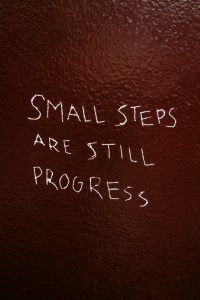
Bringing It All Together
In summary, HR and L&D professionals who want to advocate effective leadership behaviours within their organisation must understand how to be a good leader and what makes a good leader. With emotional intelligence, transparent communication, setting an example, cultivation of growth and recognition, leaders can nurture a healthy culture for their organization and create the conditions for sustainable engagement and performance.
Take the first step towards enhancing your leadership training. Explore our full Leadership Training Catalogue. Book a clarity call today to discuss how our Executive Coaching and Team Coaching can empower your leaders. Don’t forget to check out our worksheets and resources at Ebooks and Worksheets to support your leadership journey, whether you are designing programmes as HR or developing yourself as a leader.

MAIKE STOLTE
Executive Coach. Consultant. Trainer. Facilitator.
Categories
Contact us


Leadership in an AI-Driven World
Leadership in an AI-driven world requires trust, ethics, presence, and human judgment. Learn what leadership must look like now.

Leading Hybrid Teams
Leading hybrid teams requires new leadership behaviours. Learn how trust, clarity, and autonomy help hybrid teams perform and stay engaged.

Leading in Uncertainty
High-performing teams are built through leadership behaviours that create trust, clarity, and psychological safety. Learn what actually drives team performance.
0 Comments